No images? View in browser
Shop Ethical Logo
April Update from Shop Ethical!

In this edition: With a focus on animal issues, we look at the dangers of human exceptionalism, factory farming and its institutionalised cruelty, and the origin of fur and its hidden story.

Want to discuss these topics with other like-minded people? Join our Facebook group and start a conversation!


March data updates
 

Check your phone for the latest iOS and Android app update featuring all these updates!

 
April's free Assessment Search: Fur Free

Our assessment search feature lets subscribers search our full assessment database for any ethical issue you care about. We release one free assessment search each month to let everyone get a taste of this feature.


This month we highlight the Fur Free retailer list, which lists companies who have committed not to use any real animal fur products. See more in our source spotlight below.


More than Human

'Human exceptionalism' is the conviction that humans are not merely different from other life, but inherently superior and uniquely entitled to the Earth’s resources. This worldview underpins our current "crisis" of disconnection, framing the natural world as a backdrop for human profit rather than a web of kinship.


Re-framing this view is vital to dismantling institutionalised systems of animal cruelty. As David Abram and Megan Mayhew Bergman argue (in the articles below), exceptionalism creates a "psychological distance" that allows us to treat sentient beings as mere commodities - most visibly in factory farming, where animal suffering is hidden behind industrial efficiency. By changing our mindset to value and protect other species with all their own "uniquely unique" traits, we shift from a logic of conquest to one of reciprocity. Understanding that we are "earthlings" (bound together with humus or soil) reorients our value system. We find our true humanity not by centering ourselves, but by honoring the more-than-human world that sustains us.


Check out the following articles to explore and be inspired - (1) On Being Human in a More-Than-Human World ;  (2) The last frontier of empathy: why we still struggle to see ourselves as animals ; (3) Rethinking Our Place in the Web of Life


Is Factory Farming humanity's biggest crime?

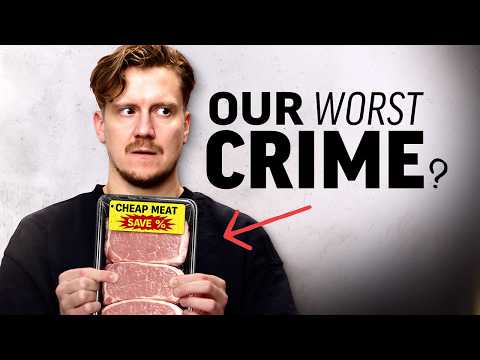
Australia is the third largest beef consumer per capita in the world, after the US and Argentina, averaging 22.4kg per person annually. The ‘World Animal Protection’ 2025 report ‘Cattle Feedlots: Australia’s Hidden Factory Farms’ found that most consumers are unaware of the fact that an overwhelming majority of this beef originates from cattle feedlots, which are rife with animal welfare issues. Intensive animal production is seen as normal business practice - this is explored in the powerful video essay 'Is factory farming humanity’s biggest crime?' - a look at factory farming through a historical and moral lens. The story begins not with animals, but with nitrogen, explosives, and industrial agriculture. 
 
Alternatives to factory farming in Australia focus on improving animal welfare, reducing environmental impacts, and increasing sustainability through methods like free-range, organic, and regenerative agriculture. Key alternatives include purchasing from local farmers' markets, supporting regenerative grazing, and transitioning to plant-based or cultivated meat products. Find alternative farms, retailers and producers near you at the FlavourCrusader directory and Open Food Network.


Source spotlight: Fur free

"Fur-free" refers to brands, retailers, and products that have committed to not using real animal fur, opting instead for synthetic or plant-based alternatives to combat animal cruelty and environmental damage. Over 1,650 companies have pledged to be fur-free through the Fur Free Retailer Program. This is an international initiative that identifies and lists brands that have made a written commitment to sell no animal fur (e.g., mink, fox, rabbit). Major fashion houses such as Gucci, Prada, Versace, Armani, Burberry, and Hugo Boss have committed to being fur-free. Other brands include Canada Goose, and Adidas. The shift is driven by animal welfare concerns, as 85% of the industry's skins come from intensive confinement farms. Furthermore, fur processing involves toxic chemicals. "Fur-free fur" uses synthetic or innovative plant-based materials (like Koba) to mimic the look and feel of fur without using animals.


Australia has no commercial fur farms, and the import/export of dog and cat fur is banned, yet the sale of other real animal fur remains legal, sparking active campaigns for a total ban. Many Australian brands and retailers have pledged to be fur-free, with over 1,500 brands joining global and local initiatives. Major department stores and brands like Levi’s and Tommy Hilfiger have committed to not selling real fur. Major events, including Melbourne Fashion Week and Virgin Australia Melbourne Fashion Festival, have banned fur from runways.

Quick bites


What's next

We've just released a new 'Featured pages' section on our front page and sidebar, which is part of a bigger site redesign that we're working on! Over the next three months we'll have a pause on design updates as one of our team members is away, but you'll keep seeing data updates coming through as usual.


Do you want to help out in our work? We always welcome volunteers with data entry, writing, social media or technical skills. If you'd like to volunteer, just reply to this email or use our contact form!


Ethical Consumer Group
PO Box 1323, Fitzroy North VIC 3068
Unsubscribe